
Live fast, die young, right? Well, maybe not for an EV.
Common EV wisdom says that DC fast charging, while incredibly convenient and necessary for many drivers, can increase battery degradation over time. Shoving electrons into the battery as fast as possible isn't typically ideal for battery longevity. However, YouTube host Branden Flasch recently bought a used Tesla Model Y with over 110,000 miles on—and it shows a surprising amount of battery degradation despite almost never being fast-charged.
So what gives?
A Tesla Model Y Battery After 100,000 Miles
The 2023 Model Y Long Range All-Wheel Drive in question only had about 2 megawatt-hours of DC fast-charging, but over 40 MWh of AC charging, according to Tesla's battery health test. It even had more charging from regen braking than DC fast-charging. With 111,703 miles in right around three years (including the cross-country trip Flasch took after buying it), the previous owner clearly drove a ton. But EVs that pack on this kind of mileage in a short time span often also DC charge a lot—because they're Uber drivers or the like. This owner, though, seems to have simply had a very long commute: 105 miles each way, according to Sentry Mode footage unearthed by Flasch from the Model Y's flash drive.

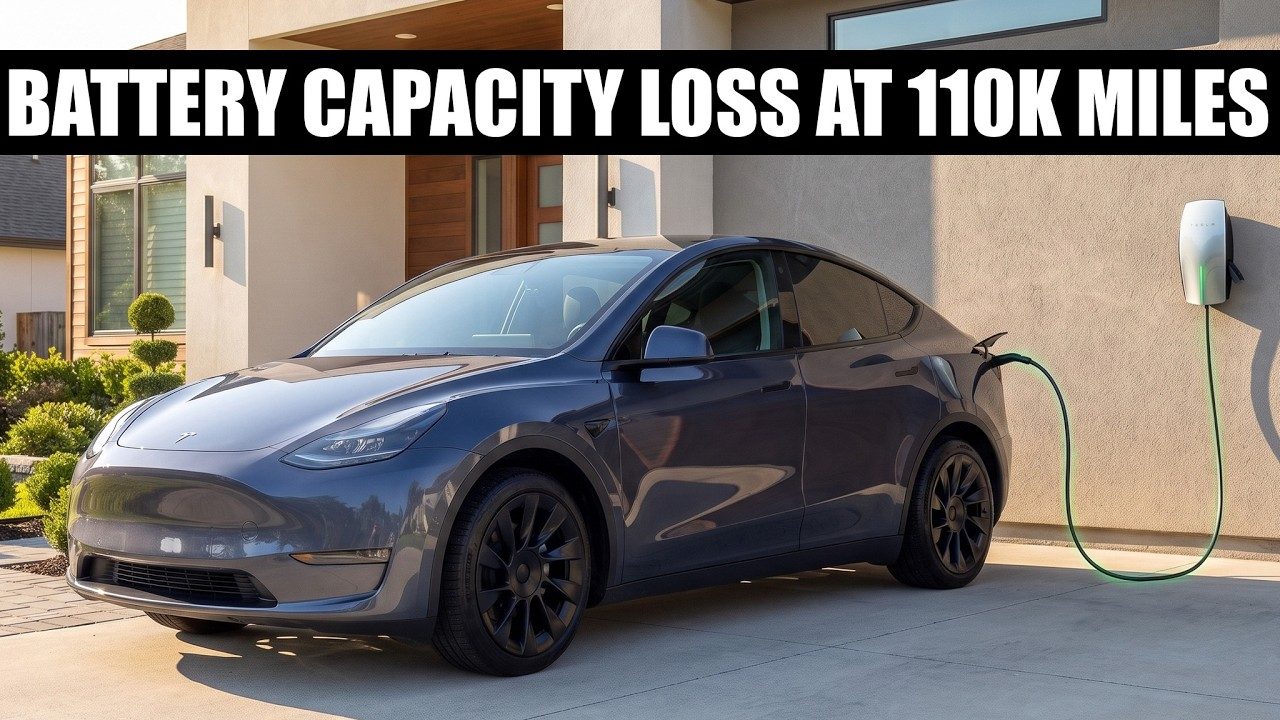
Regardless of why, the numbers don't lie. After driving the car back from the West Coast all the way to the East Coast, using Superchargers along the way, Flasch saw 77% battery health, using the Tesla's own in-car battery health test. That's a 23% reduction in just three years, which is on the more aggressive side. Using the third-party Tessie app, he saw 80.95%, which is about four percentage points better than what Tesla's own app showed.
Does Fast Charging Actually Hurt EV Batteries?
In some ways, the result isn't actually all that surprising. That's because the common wisdom that excessive fast-charging ruins EV batteries isn't totally grounded in reality. For example, battery-health startup Recurrent studied 13,000 Teslas and found that "fast charging is not having the negative effect we expected."
The proportion of fast charging an EV has experienced isn't actually a good predictor of battery health, Davide Giacobbe, cofounder of the EV health company Voltest, has told InsideEVs in the past. While fast charging can heat up a battery and contribute to capacity loss, he said in a recent LinkedIn post, the thermal management systems in modern EVs are well equipped to handle that.
Other variables can have a far greater impact on EV longevity than charging, he said, and that may help explain what's going on here.
One explanation could be that the previous owner charged to 100% and discharged to near-empty frequently. The owner may have just plugged it in at night, topping it all the way off, and then drove a helluva commute the following day. Another explanation has to do with climate. The car was originally from the Palm Springs, California, area, which regularly sees daytime temperatures in the triple digits Fahrenheit. So a ton of use in extreme heat might have caused the battery to degrade more quickly than normal.
The moral of the story, though, is that there's far more to battery degradation than fast charging or even the number on the odometer. A growing body of evidence shows that, on the whole, modern EV batteries can go the distance. And if it's fast-charging you're worried about, fret not. It doesn't seem to be as big of an issue as other factors.
Source link
Discover more from Autojunction
Subscribe to get the latest posts sent to your email.